The Quiet Details of a Woodland Walk
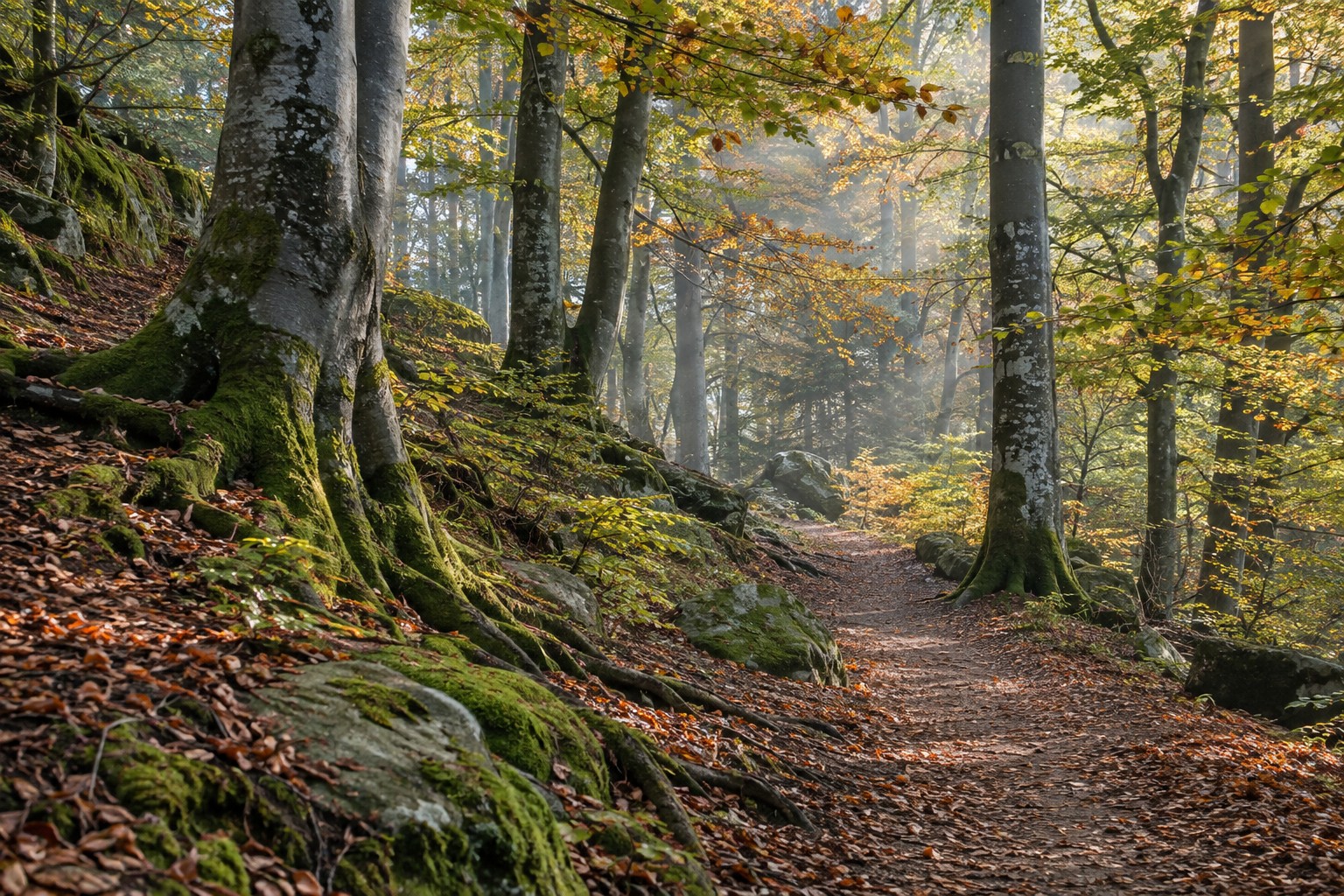
A woodland walk can begin before the path disappears beneath the trees. At the edge, the light changes first. Grass gives way to leaf litter, traffic fades behind the hedge, and a small breeze becomes easier to hear. There is no need to travel far to find this shift. A short, familiar route can hold enough detail for an unhurried morning.
Choose a path whose length leaves time to stop. A walk that fills every available minute tends to become a journey to finish. Allowing a little spare time changes the experience: you can stand beside an interesting trunk, watch a patch of sunlight move or return along the same stretch without feeling behind schedule.
Look at the woodland in layers
Start close to your feet. Fallen leaves overlap like small roof tiles, with different edges and shades depending on the tree above them. Roots cross the soil in shallow ridges. After rain, an ordinary stone may look almost black beside the pale underside of a leaf. Stay on the established path while looking; small plants at its edges are easy to miss underfoot.
Next, lift your attention to the middle distance. This is where the woodland reveals its spacing. Some trunks grow in close groups while others stand alone with branches extending into an opening. A fallen branch can become a line that draws the eye across the scene. You do not need to identify every tree to enjoy the differences.
Let the route repeat
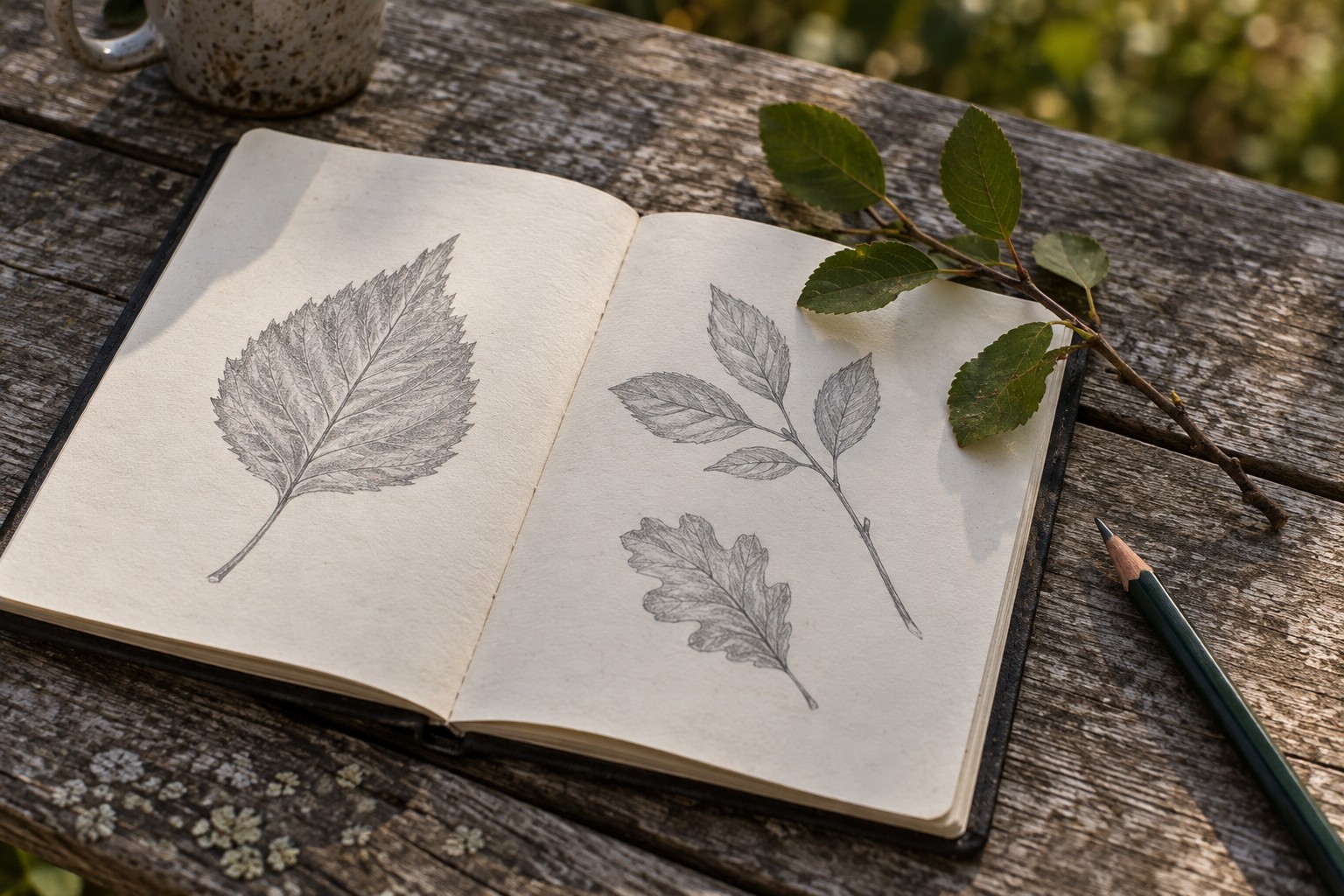
Returning to the same woodland is a useful way to notice gradual change. A patch that looked dense in summer may open into long views later in the year. Keep a brief note of one detail after each visit: the color of the path, a newly visible bend or where the light reached the ground. A sentence is enough; there is no obligation to turn the walk into a project.
If you bring a camera, try taking only a few photographs. One wide view can show the setting, while a closer frame records bark, leaves or a curve in the trail. Put the camera away between pictures so that the search for a composition does not consume the whole outing.
Before leaving, pause once more at the woodland edge. The return of open sky makes the enclosed path feel different in memory. What remains may be a sound or a small pattern rather than a dramatic view. That is often the pleasure of a local walk: it gives an ordinary place enough time to become particular.