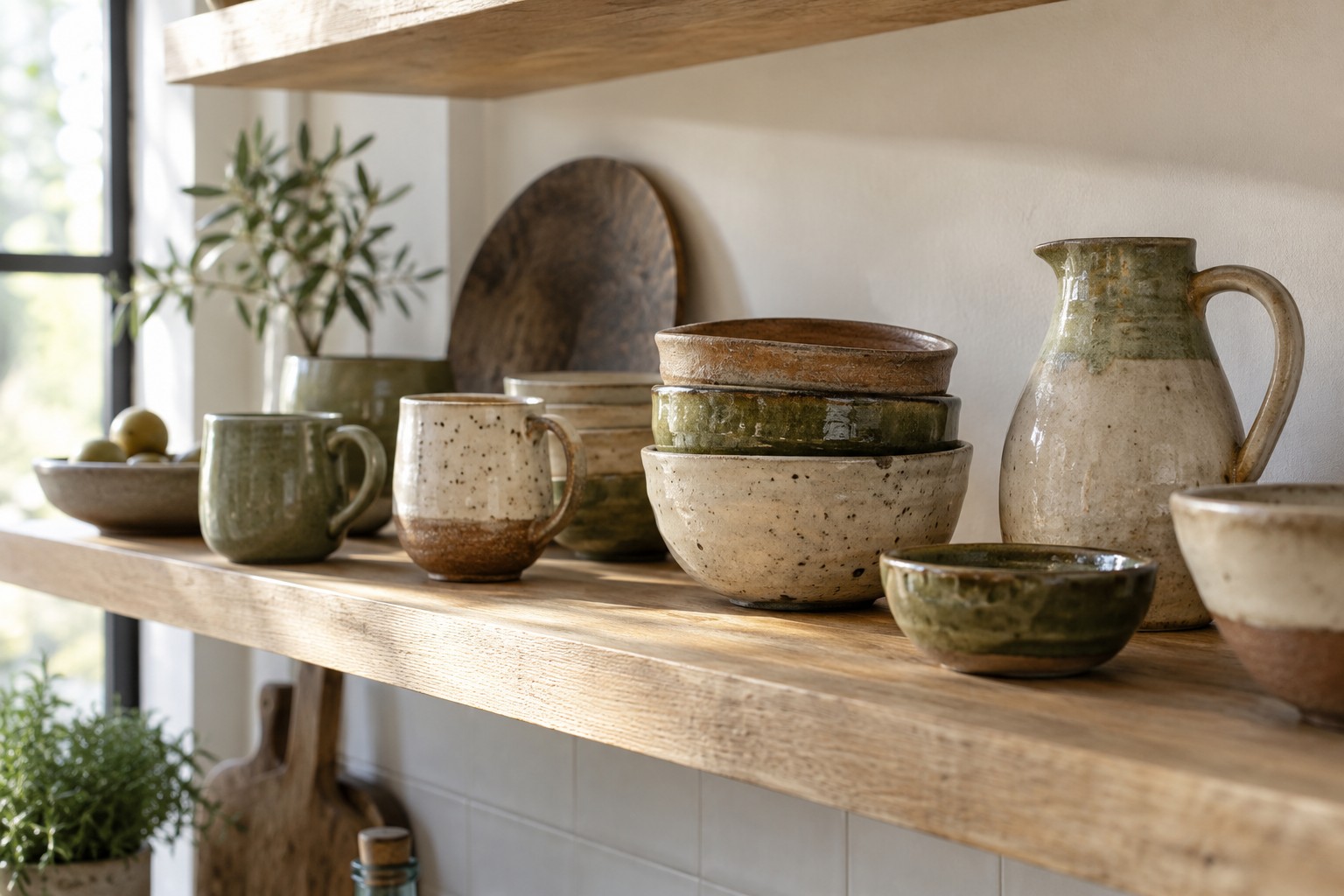
Roasted Pears for an Unhurried Afternoon
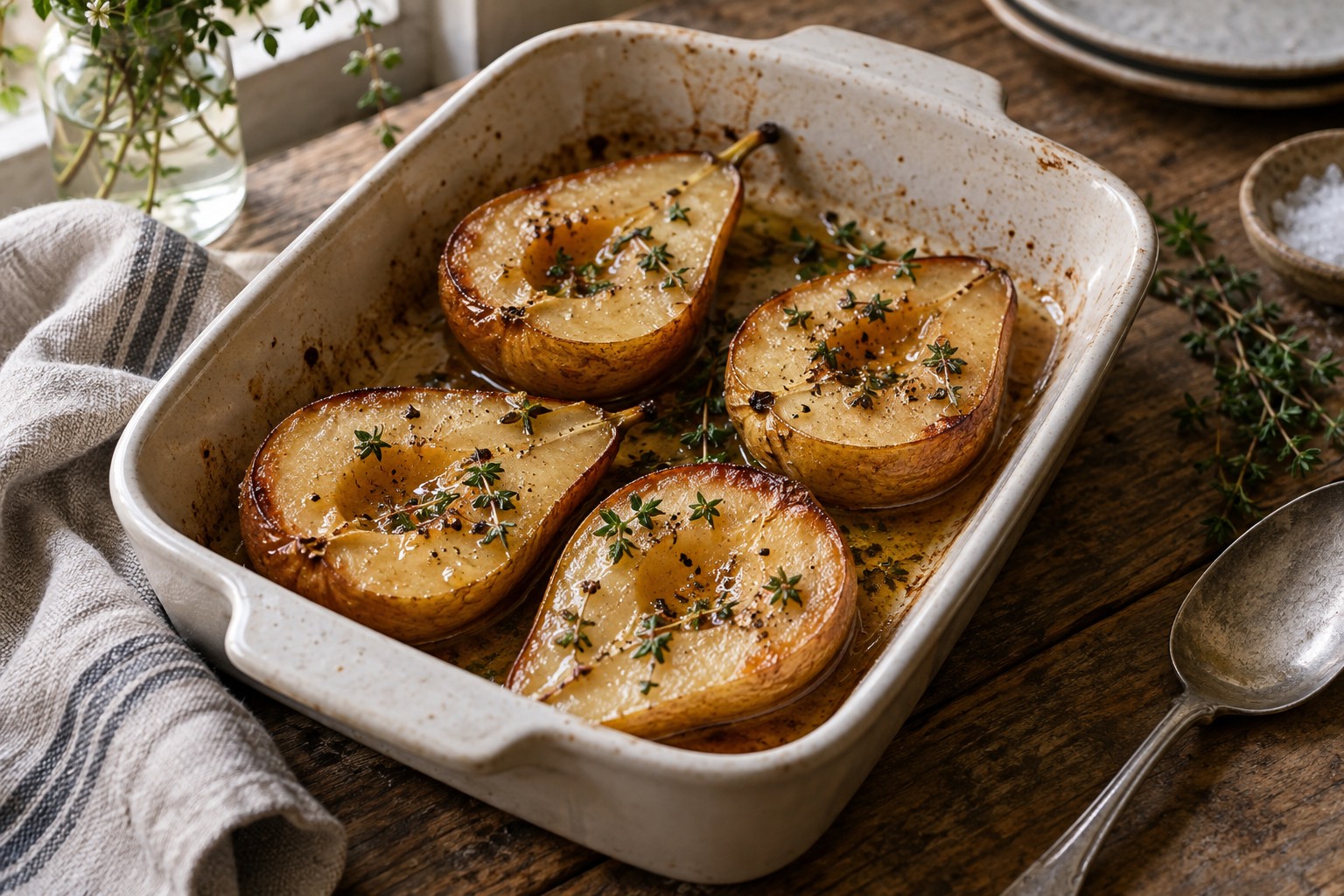
Pears have a quiet presence in the kitchen. They can sit in a bowl for several days looking almost unchanged, then suddenly become fragrant and soft near the stem. Roasting gives firmer pears another destination. The oven softens the flesh and gathers the fruit juices into a spoonable syrup at the bottom of the dish.
A small dish for two
For two generous servings, use two pears that are ripe but still hold their shape, about a tablespoon of butter, a tablespoon of honey or maple syrup, and two tablespoons of water. A little lemon juice adds brightness. Cinnamon, a split piece of vanilla pod or a sprig of thyme can provide a different direction, but choose one so the pear remains the main flavor.
Heat the oven to 180°C. Wash the pears, halve them lengthwise and remove the cores with a teaspoon. Leave the skins on if you like their texture. Place the halves cut side up in a snug baking dish. Dot them with butter, drizzle over the sweetener and add the water around the fruit rather than over it.
Bake for roughly 25 to 40 minutes, spooning the juices over the pears once or twice. The exact time depends on their size and ripeness. Look for lightly colored edges and flesh that yields easily to the tip of a knife. If the dish starts to dry before the pears soften, add another small splash of water.
What belongs beside them
Let the pears rest for a few minutes before serving. Thick plain yogurt makes a cool, slightly tart companion; a small scoop of vanilla ice cream melts into the warm juices. Toasted oats or chopped nuts offer contrast, but a pear with a spoonful of its own syrup is complete on its own.
A shallow bowl works better than a flat plate when there is plenty of juice. Place the fruit first, then spoon the liquid around it. This keeps any crisp topping from becoming soft too quickly. Bring the baking dish to the table if you prefer a more relaxed serving style.
The recipe is easy to vary without rebuilding it. Lemon zest makes the dish brighter, while a little orange zest feels rounder and sweeter. Different pear varieties can hold their shape differently, so use tenderness as your guide rather than expecting every batch to look identical.
There is a pleasant stretch of waiting while the oven does the work. Clear the small chopping board, put two bowls on the table and make tea. The appeal of this dessert is partly its modest scale: a handful of ingredients, one dish and something warm to share without turning the afternoon into a cooking schedule.