The Everyday Appeal of Handmade Ceramics
The first thing you notice about a handmade mug may be its glaze. The detail you keep noticing is often the handle. It sits a little higher than another cup, leaves room for a second finger or brings a comfortable weight to the hand. These small differences explain why one piece becomes part of a daily routine while another remains on the shelf.
Objects that work together
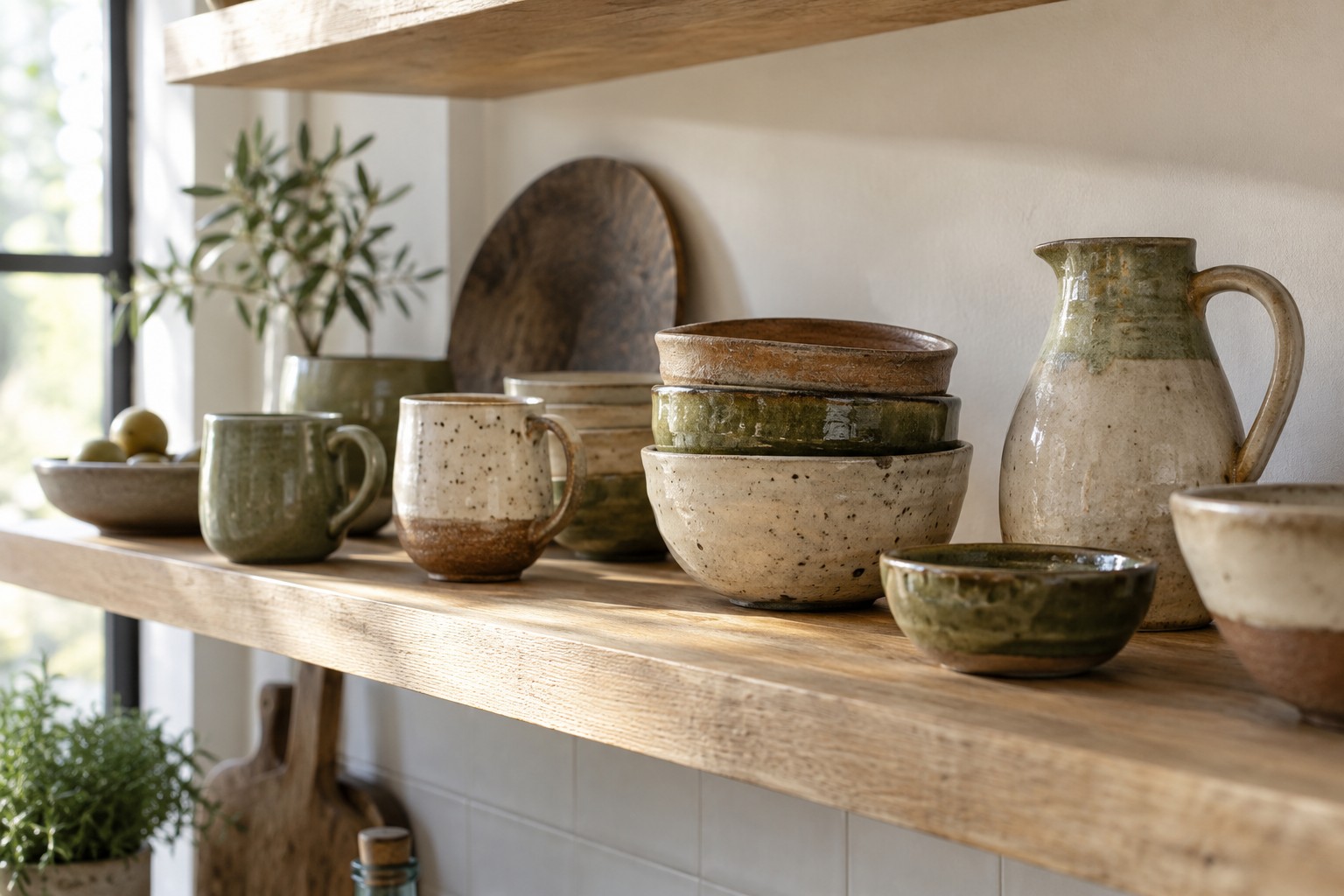
A useful collection does not have to be a matching set. A cream pitcher can sit comfortably beside olive bowls and a clay-colored cup when their shapes leave each other enough space. Repeating one quality, such as a soft sheen or a rounded rim, can bring the group together without making every piece identical.
Start with how the pieces will be used. A wide bowl suits meals with several components, while a deeper one keeps soup or breakfast cereal contained. A small plate may become a resting place for a spoon as often as it holds food. Choosing around actual habits keeps the shelf from becoming a display that is awkward to live with.
When handling a piece, notice the base as well as the visible surface. It should sit steadily on a flat table. The rim should feel comfortable, and the handle should suit the way you hold a cup. For food use and appliance care, follow the maker’s stated guidance rather than assuming that every ceramic piece has the same properties.
A shelf with a little breathing room
Stack only what sits securely together. Low stacks make it easier to lift the piece you want without moving several others. Leave taller items, such as a pitcher, beside the stack rather than behind it if they are used frequently. A practical arrangement often looks calmer simply because each object has an obvious place.
Window light brings out variations that overhead lighting can flatten. Glaze may gather into a darker band near a foot or become almost translucent along a raised edge. These changes do not need extra decoration around them. A plain wooden shelf or a quiet wall can be enough of a setting.
It is possible to enjoy the character of pottery without collecting quickly. Use a new piece for a while before deciding what is missing. You may discover that a favorite bowl covers several needs, or that the cup you admired is less comfortable than the one you already own.
The strongest connection with everyday objects usually grows through repetition. A mug belongs to an early breakfast; a shallow bowl appears whenever fruit is shared at the table. The shelf becomes personal through these associations. Its interest comes from things being used, washed and returned, ready for the next ordinary day.